Sub-Total: $0.00
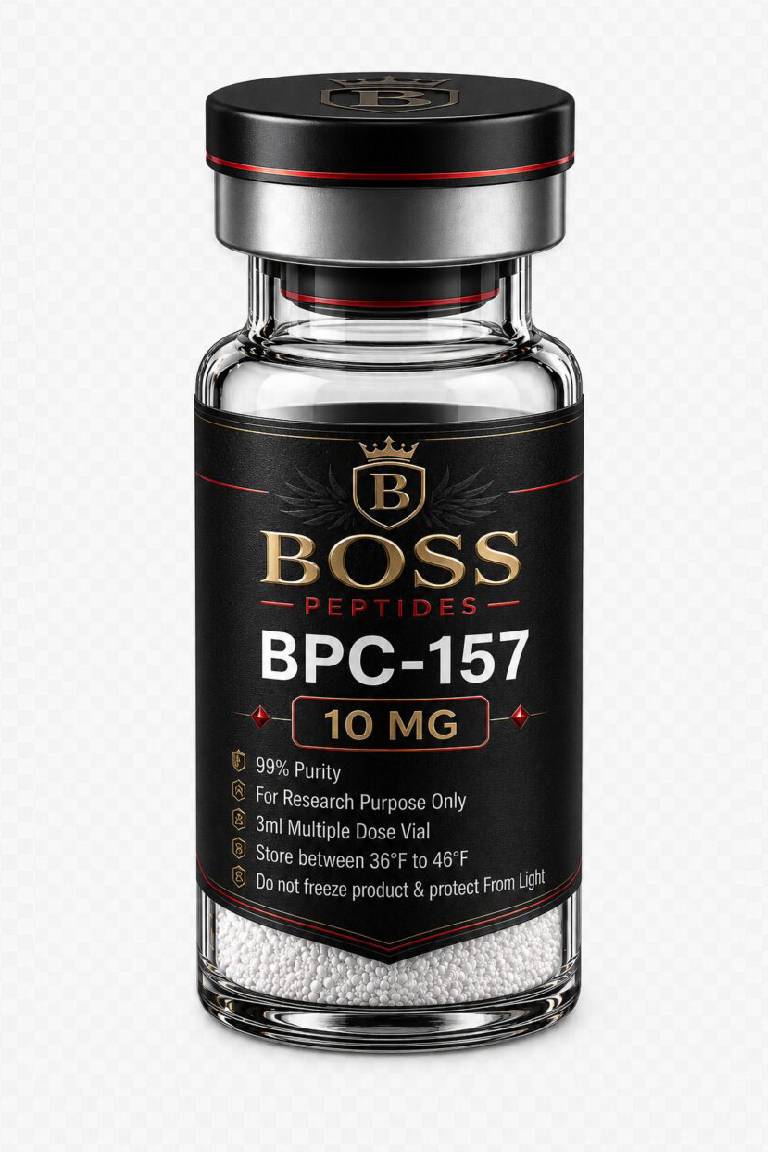
Boss∣∣BPC 10 CARD BPC-157 10MG
$60.00
Buy BPC‑157 10mg with 99% purity and full COA verification. Boss Peptides provides research‑grade BPC‑157 manufactured under strict quality standards for consistency, stability, and reliable performance in laboratory settings. Fast U.S. shipping. For research use only.
Description
What Is BPC‑157?
BPC‑157, also known as Pentadecapeptide BPC‑157 or Body Protection Compound 157, is a synthetic peptide composed of 15 amino acids. Researchers isolated the original BPC fragment from gastric juice, and the peptide has since gained interest for its potential protective properties. Because it contains 15 amino acids, it is also referred to as a pentadecapeptide.
Overview of BPC‑157 Research
Researchers have steadily explored BPC‑157 for its potential role in wound‑healing models. Several studies suggest that BPC‑157 may interact with growth hormone (GH) receptors, which could support cell proliferation. As a result, researchers have observed possible increases in collagen formation and angiogenesis, both of which contribute to faster tissue rebuilding.
Additionally, BPC‑157 has been examined for its relationship to gastrointestinal function. Serotonin, a key neurotransmitter in the GI tract, influences gastric acid secretion and mucosal blood flow. Some studies indicate that BPC‑157 may counteract serotonin‑related activity by interacting with 5‑HT2A receptors. Because of this, researchers continue to investigate its potential across multiple systems, including tissue repair, pain perception, GI regulation, and musculoskeletal recovery.
Chemical Makeup
- Molecular Formula: C62H98N16O22
- Molecular Weight: 1419.55 g/mol
- Other Names: Body Protection Compound‑157
🧪 Research and Clinical Studies
BPC‑157 and Wound Healing
Several murine studies have evaluated BPC‑157 in wound‑healing environments. In one experiment, researchers compared skin wounds, colon anastomosis, and synthetic sponge implants. Models that received BPC‑157 showed higher levels of collagen, reticulin, and blood vessel development compared to controls.
Another study examined whether BPC‑157 could accelerate wound healing. Researchers observed potential improvements in granulation tissue formation, reepithelialization, dermal remodeling, and collagen deposition. They also noted increased expression of VEGF, a protein essential for blood vessel growth. Because VEGF supports angiogenesis, this finding suggests a possible mechanism for the peptide’s observed effects.
Furthermore, BPC‑157 appeared to influence HUVEC proliferation and migration in vitro. Researchers also reported changes in ERK1/2 phosphorylation and downstream proteins such as c‑Fos, c‑Jun, and Egr‑1. These pathways play important roles in cell growth and angiogenesis, which may explain the observed wound‑healing patterns.
BPC‑157 and Tendon Healing
In tendon fibroblast cultures, researchers compared a control group to a group exposed to BPC‑157. The peptide group showed increased fibroblast outgrowth, improved cell survival under oxidative stress, and enhanced cell migration. Researchers also observed increased phosphorylation of PAK and paxillin, suggesting activation of the FAK‑paxillin pathway.
Because F‑actin formation supports cell structure and movement, these findings point to a potential role for BPC‑157 in tendon repair and cytoskeletal organization.
BPC‑157 and Gastrointestinal Healing
Researchers have compared BPC‑157 to angiogenic growth factors such as EGF, FGF, and VEGF. In these studies, BPC‑157 consistently supported healing across multiple GI wound types, including the esophagus, stomach, duodenum, and lower GI tract. This consistency suggests a broad angiogenic potential that may extend to ligaments, bone, and other tissues.
BPC‑157 and Tissue Damage
Additional studies have explored BPC‑157’s potential effects on pancreatic lesions, liver injuries, heart damage, endothelial disruption, and blood pressure irregularities. Researchers proposed that BPC‑157 may interact with peptidergic defense systems, which could influence both acute and chronic inflammation. They also noted possible interactions with dopamine, nitric oxide, prostaglandins, and somatosensory neuron systems.
BPC‑157 and Muscle Healing
In a study involving corticosteroid‑impaired muscle healing, researchers divided murine models into two groups: one received BPC‑157 and the other a placebo. Corticosteroids worsened muscle damage, but the BPC‑157 group showed signs of improved healing and restored function in the gastrocnemius muscle.
BPC‑157 and Dopamine‑Related Activity
Because earlier studies suggested interactions with the dopamine system, researchers tested BPC‑157 in amphetamine‑induced hypersensitivity models. BPC‑157 appeared to reverse amphetamine‑related excitability. In additional tests involving haloperidol followed by amphetamine, BPC‑157 nearly reversed the observed hypersensitivity.
BPC‑157 and the Central Nervous System
In traumatic brain injury (TBI) models, BPC‑157 showed potential in reducing lesion severity. Researchers observed lower mortality rates, reduced hemorrhage severity, and improved early outcomes. They also noted reduced brain edema. When BPC‑157 was introduced before injury, the models showed improved consciousness outcomes and reduced damage from force‑impulse trauma.
⚠️ Research Use Only
BPC‑157 is available for research and laboratory purposes only. Please review and follow all Terms and Conditions before ordering.