Description
<h2>Introduction to Ipamorelin Peptide</h2>
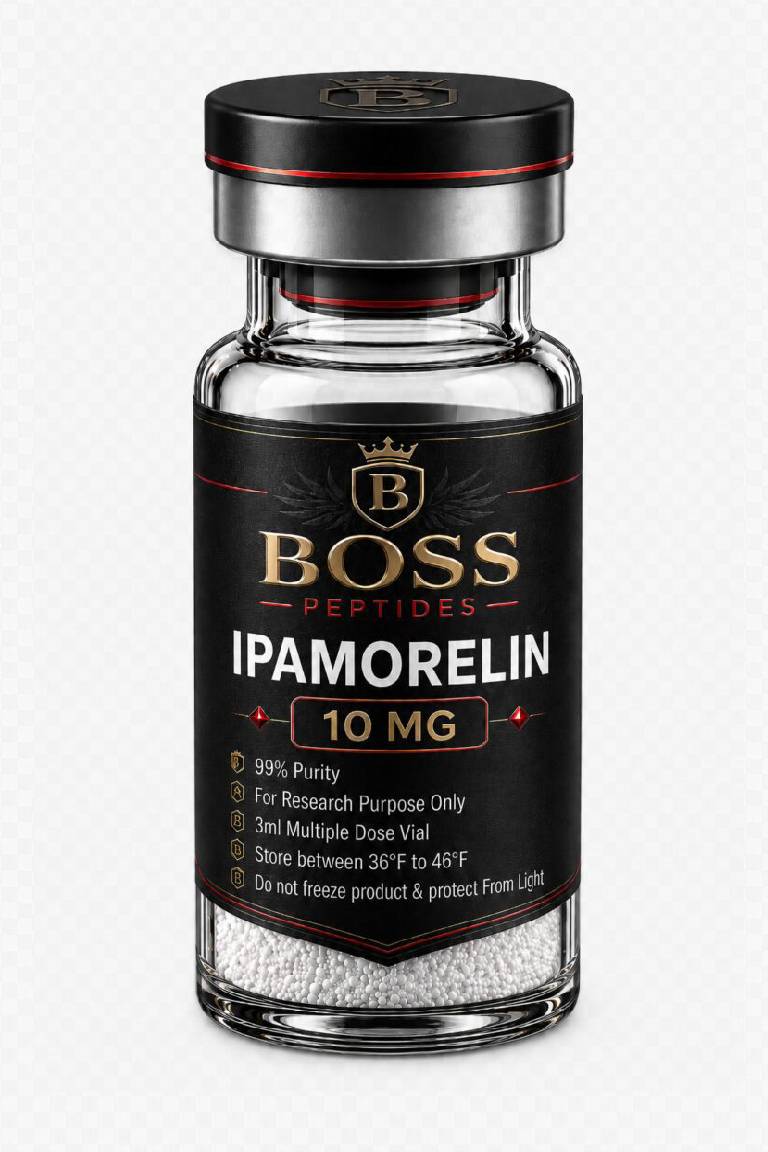
Ipamorelin is a synthetic pentapeptide classified as a Growth Hormone Secretagogue (GHS). Researchers study Ipamorelin to evaluate its selective interaction with GHS‑R receptors, which are also known as ghrelin receptors. Additionally, Ipamorelin’s design allows it to stimulate growth‑hormone pathways without significantly influencing other pituitary hormones. Because of this selectivity, Ipamorelin remains a key subject in endocrine and metabolic research. This product supports controlled laboratory research only.
<h2>Mechanisms and Pathway Activity</h2>
Ipamorelin binds to GHS‑R receptors in the anterior pituitary and activates downstream signaling pathways. Furthermore, studies suggest that Ipamorelin influences PLC activation, IP3 release, and PKC signaling. As a result, researchers continue examining Ipamorelin’s role in calcium‑dependent GH secretion and IGF‑1 pathway regulation. Early findings also highlight its potential to stimulate pulsatile GH activity in controlled research environments.
<h2>Selective Receptor Activity</h2>
Ipamorelin is recognized for its high receptor selectivity. Unlike other GHS compounds, Ipamorelin appears to stimulate GH release without significantly affecting prolactin or ACTH levels. Moreover, researchers note that this selectivity may support more targeted GH‑related investigations. Consequently, Ipamorelin remains relevant in studies involving endocrine signaling and metabolic regulation.
<h2>Ipamorelin and Growth‑Hormone Synthesis</h2>
Researchers frequently evaluate Ipamorelin in GH‑secretion models. For example, studies involving pituitary‑cell cultures report increased intracellular calcium levels and enhanced GH vesicle exocytosis. Additionally, clinical research involving controlled dosing intervals shows notable increases in circulating GH levels. Therefore, Ipamorelin continues to attract interest in GH‑focused research environments.
<h2>Ipamorelin and Bone‑Related Research</h2>
Ipamorelin also appears in studies involving bone‑tissue metabolism. Researchers examine its potential influence on osteoblast activity, bone‑mineral content, and skeletal‑structure markers. Furthermore, imaging‑based studies involving murine models report changes in cortical bone area and mineral content. These findings support ongoing interest in Ipamorelin’s role in skeletal‑biology research.
<h2>Ipamorelin and Digestive Function</h2>
Researchers have explored Ipamorelin in gastric‑motility models. For example, studies involving delayed gastric emptying show accelerated emptying rates following Ipamorelin exposure. Additionally, research suggests potential interactions with smooth‑muscle contractility and acetylcholine‑mediated responses. As a result, Ipamorelin remains relevant in digestive‑motility investigations.
<h2>Ipamorelin and Appetite Signaling</h2>
Because Ipamorelin interacts with ghrelin receptors, researchers also evaluate its influence on appetite‑related pathways. Studies involving murine models report increased feeding behavior and changes in body‑composition markers. Moreover, researchers continue examining how Ipamorelin may influence leptin signaling and energy‑balance pathways in controlled environments.
<h2>Ipamorelin and Nitrogen Balance</h2>
Ipamorelin appears in research involving nitrogen‑balance regulation and metabolic‑stress models. For example, studies involving liver‑enzyme expression suggest potential effects on urea‑cycle markers and nitrogen distribution. Additionally, researchers evaluate Ipamorelin’s role in IGF‑1–mediated anabolic pathways. Overall, these findings reinforce Ipamorelin’s importance in metabolic‑regulation research.
<h2>Handling and Research Use</h2>
Ipamorelin 10MG arrives as a lyophilized powder and should be handled only by trained laboratory personnel. All information provided supports scientific and educational purposes. Boss Peptide does not offer guidance on usage, handling, or application outside research settings.
<h2>Related Research Peptides</h2>
<a href=”/cjc-1295-dac-2mg/”>CJC‑1295 DAC</a><br>
<a href=”/sermorelin-5mg/”>Sermorelin 5MG</a><br>
<a href=”/tesamorelin-10mg/”>Tesamorelin 10MG</a><br>
<a href=”/bpc-157-5mg/”>BPC‑157 5MG</a><br>
<a href=”/tb-500-5mg/”>TB‑500 5MG</a>
<h2>External Research Reference</h2>
For peer‑reviewed scientific literature, researchers often consult <a href=”https://pubmed.ncbi.nlm.nih.gov/” target=”_blank”>PubMed</a>.
Ipamorelin Dosage Chart – 10 mg Vial Protocol | PeptideDosages.com
What Is Ipamorelin Used For? Benefits & Effects – ScienceInsights

 Tirzepatide 30MGProduct
1 × $80.00
Tirzepatide 30MGProduct
1 × $80.00 Tirzepatide 30MGProduct
  KLOW Peptide Blend 80MG
  KPV 10MG
  BPC-157 10MG
  GHRP-2 10MG