Sub-Total: $0.00
MOTS-C Peptide Research: Muscle Regeneration, Weight Management, Sports Performance & Recovery

MOTS-C Peptide Research: Muscle Cell Regeneration, Weight Management, Lifestyle Expression, Sports Performance, and Recovery
Introduction
MOTS-C is one of the most researched mitochondrial-derived peptides in the fields of metabolism, exercise science, muscle function, and longevity-focused cellular research. As a peptide encoded by mitochondrial DNA, MOTS-C plays a unique role in the study of mitochondrial signaling, cellular energy regulation, skeletal muscle metabolism, weight management pathways, and age-related metabolic adaptation.
Search interest around phrases such as “MOTS-C benefits,” “MOTS-C peptide,” “MOTS-C muscle regeneration,” “MOTS-C weight management,” “MOTS-C sports performance,” and “MOTS-C recovery” continues to grow as more researchers investigate how mitochondrial peptides influence energy balance, muscle cell stress response, glucose metabolism, insulin sensitivity, and exercise adaptation.
MOTS-C is especially important because mitochondria do much more than produce ATP. Mitochondria also act as cellular communication centers. They help regulate metabolism, inflammation, oxidative stress, nutrient sensing, cellular repair, and stress resilience. MOTS-C appears to function as part of this mitochondrial communication network, making it a valuable subject in research involving muscle cells, fat metabolism, physical performance models, metabolic disorders, and healthy aging.
This paper explores four major research areas: MOTS-C’s influence on muscle cell regeneration, the role of MOTS-C in weight management, how lifestyle factors influence MOTS-C expression, and MOTS-C in the context of sports performance and recovery. MOTS-C remains an investigational research peptide and should not be described as an approved treatment, supplement, performance enhancer, or human-use therapy.
1. What Is MOTS-C?
MOTS-C stands for mitochondrial open reading frame of the 12S rRNA type-c. It is a 16-amino-acid mitochondrial-derived peptide encoded by mitochondrial DNA. Because it originates from the mitochondrial genome, MOTS-C is directly connected to the study of mitochondrial communication, energy metabolism, and stress-response biology.
MOTS-C has been researched for its role in:
- Cellular metabolism
- Skeletal muscle energy regulation
- Glucose uptake
- Fatty acid oxidation
- AMPK activation
- Mitochondrial biogenesis
- Insulin sensitivity
- Exercise adaptation
- Muscle cell stress response
- Age-related metabolic decline
- Weight management research
- Recovery and performance models
MOTS-C is often discussed as a metabolic signaling peptide because it appears to influence how cells respond to energy demand, nutrient stress, physical stress, and mitochondrial strain. This makes it highly relevant to research involving muscle regeneration, fat metabolism, metabolic flexibility, and sports performance models.
2. MOTS-C’s Influence on Muscle Cell Regeneration
Muscle cell regeneration is a complex biological process involving muscle stem cells, satellite cells, mitochondrial activity, protein repair, inflammation control, nutrient availability, and cellular energy production. When muscle tissue experiences stress, injury, exercise strain, or age-related decline, the body must activate repair pathways to restore muscle structure and function.
MOTS-C is relevant to muscle cell regeneration research because skeletal muscle is one of the major tissues connected to MOTS-C activity. Research suggests that MOTS-C is involved in skeletal muscle metabolism, glucose handling, mitochondrial stress response, and adaptive signaling under metabolic stress.
2.1 Skeletal Muscle as a Primary Research Target
Skeletal muscle is one of the most metabolically active tissues in the body. It plays a major role in glucose disposal, energy expenditure, insulin sensitivity, fat oxidation, exercise capacity, and physical function. Because MOTS-C has been studied in relation to skeletal muscle metabolism, it is often evaluated in models involving muscle function, muscle aging, exercise performance, and metabolic health.
In muscle cells, MOTS-C research is commonly connected to:
- Mitochondrial energy production
- Glucose uptake
- Fatty acid oxidation
- AMPK activation
- Cellular stress adaptation
- Muscle endurance models
- Metabolic flexibility
- Muscle repair signaling
- Exercise-induced adaptation
- Age-related muscle decline
2.2 MOTS-C and Muscle Cell Stress Response
Muscle regeneration requires cells to respond efficiently to stress. Exercise, injury, inflammation, oxidative stress, and nutrient imbalance can all challenge muscle cells. MOTS-C appears to be part of the cellular stress-response network that helps muscle cells adapt to metabolic demand.
When muscle cells experience stress, mitochondria must increase energy production, control reactive oxygen species, and coordinate repair-related signaling. MOTS-C is being studied because it may help regulate these adaptive responses through mitochondrial-to-nuclear communication and AMPK-related pathways.
2.3 MOTS-C, AMPK, and Muscle Regeneration Pathways
AMPK, or AMP-activated protein kinase, is one of the most important energy-sensing pathways in muscle cells. When energy demand rises, AMPK helps increase glucose uptake, fatty acid oxidation, mitochondrial biogenesis, and metabolic efficiency.
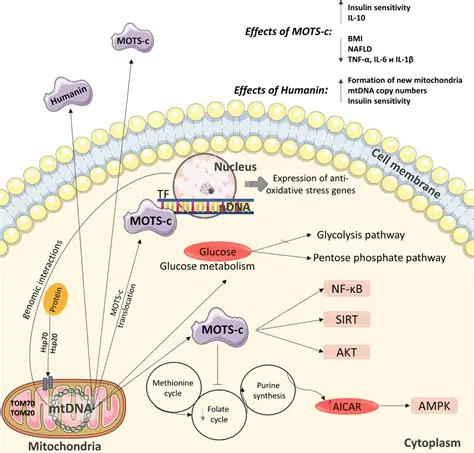
MOTS-C is believed to influence AMPK-related pathways through folate-purine metabolism and AICAR accumulation. This makes MOTS-C highly relevant to muscle regeneration research because muscle repair requires both energy availability and metabolic coordination.
AMPK activation may support muscle research pathways by influencing:
- Glucose transport
- Fatty acid metabolism
- Mitochondrial biogenesis
- Energy homeostasis
- Cellular stress resistance
- Exercise adaptation
- Protein and metabolic balance
2.4 MOTS-C and Mitochondrial Biogenesis in Muscle Cells
Mitochondrial biogenesis is the process by which cells create new mitochondria. In skeletal muscle, mitochondrial biogenesis is critical for endurance, recovery, energy output, and metabolic health. MOTS-C has been studied in connection with mitochondrial biogenesis and PGC-1α-related signaling, both of which are important in muscle adaptation and performance research.
Better mitochondrial density and function are associated with improved muscle energy production and greater resilience under physical stress. For this reason, MOTS-C is a valuable research peptide in studies involving muscle cell regeneration, exercise recovery, and age-related muscle function.
2.5 MOTS-C and Age-Related Muscle Decline
Aging is often associated with reduced mitochondrial function, lower muscle mass, decreased muscle strength, impaired recovery, and reduced metabolic flexibility. MOTS-C research is relevant because its expression has been associated with exercise, stress response, and age-related metabolic changes.
In aging-related muscle research, MOTS-C is commonly studied for its potential relationship with:
- Muscle endurance
- Mitochondrial function
- Physical capacity
- Muscle stress response
- Metabolic adaptation
- Healthy aging pathways
- Sarcopenia-related models
MOTS-C should not be described as a proven treatment for muscle loss or injury. However, it is a strong research candidate for understanding how mitochondrial peptides may influence muscle adaptation, repair signaling, and age-related physical decline.
3. The Role of MOTS-C in Weight Management Research
Weight management is influenced by many biological systems, including energy intake, energy expenditure, insulin sensitivity, glucose metabolism, fat oxidation, mitochondrial function, inflammation, appetite signaling, and physical activity. MOTS-C is relevant to weight management research because it appears to interact with pathways that regulate energy use and metabolic flexibility.
The phrase “MOTS-C weight management” is a strong SEO keyword because researchers and consumers are increasingly interested in how mitochondrial peptides relate to obesity models, fat metabolism, glucose utilization, and energy expenditure. However, MOTS-C should not be marketed as a weight-loss drug or human-use therapy.
3.1 MOTS-C and Energy Expenditure
Energy expenditure refers to how much energy the body uses. Research models suggest that MOTS-C may influence energy expenditure by supporting metabolic pathways related to glucose utilization, fatty acid oxidation, and mitochondrial activity.
MOTS-C has been studied in high-fat diet and obesity-related models where energy balance and insulin sensitivity are key outcomes. In these models, MOTS-C has been associated with improved metabolic homeostasis, suggesting that it may influence how cells process nutrients and respond to excess energy intake.
3.2 MOTS-C and Fat Metabolism
Fat metabolism involves the storage, breakdown, and oxidation of fatty acids. In metabolic research, MOTS-C is often discussed in relation to fatty acid oxidation because AMPK activation can promote the use of fatty acids for energy.
MOTS-C may support research into:
- Fatty acid oxidation
- Lipid metabolism
- Energy balance
- Reduced fat accumulation models
- Metabolic flexibility
- Obesity-related pathways
- High-fat diet response
- Insulin resistance models
It is important to avoid saying that MOTS-C “burns fat” in humans. A safer and more accurate SEO phrase is: “MOTS-C is being studied for its role in fat metabolism, energy expenditure, and weight management research models.”
3.3 MOTS-C and Glucose Utilization
Glucose utilization is a major part of weight management and metabolic health. When cells use glucose efficiently, blood sugar regulation and energy balance may improve in research models. MOTS-C is strongly connected to glucose metabolism because it has been studied for its influence on glucose uptake and insulin sensitivity.
Skeletal muscle plays a major role in glucose disposal. Since MOTS-C research frequently focuses on skeletal muscle metabolism, this peptide is particularly relevant to studies involving glucose uptake, insulin-response pathways, and metabolic flexibility.
3.4 MOTS-C and Metabolic Flexibility
Metabolic flexibility is the ability to switch between fuel sources, such as carbohydrates and fats, depending on energy demand and nutrient availability. Poor metabolic flexibility is commonly associated with obesity, insulin resistance, and age-related metabolic decline.
MOTS-C research is valuable because it may help scientists understand how mitochondrial signaling supports fuel switching and energy adaptation. This makes MOTS-C a strong topic for SEO content focused on metabolic wellness, weight management research, and longevity science.
3.5 MOTS-C and Obesity Research Models
MOTS-C has been studied in obesity-related models because of its relationship with energy expenditure, glucose metabolism, fat metabolism, and insulin sensitivity. Research suggests that MOTS-C may help regulate metabolic homeostasis in high-fat diet models.
For compliance, it is best to describe MOTS-C as a compound being investigated in obesity and weight management research, not as a proven obesity treatment or weight-loss therapy.
4. How Lifestyle Factors Influence MOTS-C Expression
Lifestyle factors are important in MOTS-C research because MOTS-C appears to be responsive to exercise, stress, aging, and metabolic conditions. Understanding how lifestyle influences MOTS-C expression may help researchers better understand the relationship between mitochondrial peptides, physical activity, metabolic health, and aging.
The keyword phrase “how to increase MOTS-C naturally” is searched often, but website content should be careful not to make direct treatment claims. A safer phrase is: “Lifestyle factors such as exercise and metabolic stress may influence MOTS-C expression in research studies.”
4.1 Exercise and MOTS-C Expression
Exercise is one of the strongest lifestyle factors connected to MOTS-C. Research suggests that MOTS-C can increase in response to exercise and may be involved in skeletal muscle adaptation. This is one reason MOTS-C is often described as an exercise-induced mitochondrial peptide.
Exercise creates controlled metabolic stress. During exercise, muscle cells increase energy demand, glucose uptake, fatty acid oxidation, mitochondrial respiration, and stress-response signaling. MOTS-C may participate in this adaptive response by helping regulate energy balance and mitochondrial communication.
Exercise-related MOTS-C research includes:
- Acute exercise response
- High-intensity exercise models
- Skeletal muscle adaptation
- Circulating MOTS-C levels
- Mitochondrial peptide expression
- Exercise-induced stress signaling
- Muscle glucose uptake
- Physical performance models
4.2 Exercise Type, Intensity, and Duration
MOTS-C expression may vary depending on the type, intensity, and duration of exercise. Some studies suggest acute high-intensity exercise may increase MOTS-C levels, while longer-term changes may depend on training status, age, sex, fitness level, and exercise modality.
This makes MOTS-C an important topic in exercise science because it may help explain why different training styles produce different metabolic outcomes.
Potential exercise-related factors include:
- Resistance training
- Endurance training
- High-intensity interval training
- Sprint training
- Exercise duration
- Training frequency
- Recovery status
- Age and baseline fitness
- Metabolic health status
4.3 Aging and MOTS-C Expression
MOTS-C expression appears to decrease with age in some research contexts. This is important because aging is associated with mitochondrial dysfunction, reduced metabolic flexibility, lower insulin sensitivity, impaired muscle recovery, and increased inflammation.
If MOTS-C is part of the mitochondrial stress-response system, lower MOTS-C signaling with age may contribute to reduced metabolic resilience. This makes MOTS-C an important research target in longevity studies, muscle aging, and age-related metabolic health.
4.4 Diet and Metabolic Stress
Dietary patterns influence mitochondrial function, glucose metabolism, insulin sensitivity, inflammation, and body composition. Although more research is needed to fully define how diet influences MOTS-C expression, metabolic stress from high-fat diets, overnutrition, insulin resistance, and obesity-related models is closely connected to MOTS-C research.
MOTS-C may be particularly relevant in studies where diet alters:
- Glucose metabolism
- Fat metabolism
- Insulin sensitivity
- Mitochondrial respiration
- Inflammatory signaling
- Oxidative stress
- Energy expenditure
- Metabolic flexibility
4.5 Sleep, Stress, and Recovery
Sleep and recovery are important for mitochondrial function and metabolic regulation. Poor sleep and chronic stress can impair insulin sensitivity, increase inflammation, disrupt energy metabolism, and reduce recovery capacity.
While direct research on sleep and MOTS-C expression is still developing, MOTS-C belongs to a broader mitochondrial stress-response network. This makes it relevant to future studies involving recovery, circadian biology, metabolic stress, and resilience.
5. MOTS-C in Sports Performance and Recovery Research
MOTS-C has gained major attention in sports performance research because of its relationship with skeletal muscle metabolism, AMPK activation, exercise adaptation, mitochondrial biogenesis, and physical capacity in animal models. However, MOTS-C is prohibited in competitive sport under anti-doping rules and should not be promoted for athlete use.
For SEO, terms like “MOTS-C sports performance,” “MOTS-C recovery,” “MOTS-C exercise,” and “MOTS-C endurance” are high-interest keywords. The safest content approach is to discuss these topics from a research and regulatory perspective.
5.1 MOTS-C and Exercise Performance Models
MOTS-C has been studied in exercise performance models because it may influence skeletal muscle energy metabolism, mitochondrial function, and stress-response pathways. Research in animal models has reported improved physical performance and exercise capacity, especially in aging-related contexts.
The key performance-related research areas include:
- Endurance capacity
- Muscle energy production
- Mitochondrial bioenergetics
- Exercise adaptation
- Skeletal muscle glucose uptake
- Stress-response signaling
- Physical capacity in aging models
- Recovery from metabolic stress
5.2 MOTS-C and Muscle Recovery
Recovery after exercise requires energy production, inflammation control, repair signaling, mitochondrial efficiency, and nutrient availability. MOTS-C may be relevant to recovery research because it appears to influence cellular stress adaptation and mitochondrial function.
MOTS-C recovery research may involve:
- Muscle stress response
- Oxidative stress regulation
- Mitochondrial repair signaling
- Inflammatory balance
- Glucose uptake after exercise
- Energy restoration
- Muscle adaptation pathways
- Age-related recovery decline
MOTS-C should not be marketed as a recovery supplement or athlete performance product. It is more accurate to say that MOTS-C is being investigated for its role in muscle recovery pathways and exercise adaptation models.
5.3 MOTS-C and Endurance Research
Endurance performance depends heavily on mitochondrial function. The more efficiently muscle mitochondria produce energy, the better cells can sustain activity under prolonged physical demand. MOTS-C is relevant because it is connected to mitochondrial signaling and AMPK-related pathways.
Endurance research involving MOTS-C may include:
- Oxygen utilization
- Fatty acid oxidation
- ATP production
- Mitochondrial biogenesis
- Muscle fatigue resistance
- Exercise-induced metabolic adaptation
- Older-age endurance capacity
5.4 MOTS-C and Resistance Training Research
Resistance training depends on muscle force production, recovery, protein remodeling, satellite cell activity, and mitochondrial energy support. Although MOTS-C is more often discussed in metabolic and endurance contexts, it may also be relevant to resistance training research because muscle regeneration and repair require strong mitochondrial function.
Potential resistance-training research areas include:
- Muscle cell repair
- Energy availability during recovery
- Mitochondrial adaptation
- Muscle force models
- Age-related strength decline
- Recovery from exercise-induced muscle stress
5.5 MOTS-C and Sports Compliance
MOTS-C is prohibited in competitive sport because it falls under the category of metabolic modulators, specifically AMPK activators. This is extremely important for any content discussing MOTS-C and athletic performance.
Any website content on MOTS-C and sports performance should clearly state:
- MOTS-C is prohibited in competitive sport.
- MOTS-C should not be used by tested athletes.
- MOTS-C is not approved for human use.
- MOTS-C is for research use only.
- It should not be marketed as a performance enhancer.
This protects both the reader and the business from misleading or non-compliant claims.
6. MOTS-C, AMPK Activation, and Exercise-Like Signaling
One reason MOTS-C receives so much attention is its connection to AMPK activation. AMPK is a central metabolic regulator that responds to low energy availability and increased energy demand. Exercise, fasting, caloric restriction, and metabolic stress can all activate AMPK-related pathways.
MOTS-C research suggests that it may influence AMPK through folate-purine metabolism and AICAR accumulation. This creates overlap between MOTS-C signaling and exercise-like metabolic responses.
AMPK-related research areas include:
- Glucose uptake
- Fatty acid oxidation
- Mitochondrial biogenesis
- Energy expenditure
- Stress adaptation
- Insulin sensitivity
- Muscle metabolism
- Weight management research
- Exercise performance models
This is why MOTS-C is sometimes discussed as an “exercise-mimetic” peptide. However, that term should be used carefully. MOTS-C should not be presented as a replacement for exercise. A better phrase is: “MOTS-C is being studied for its involvement in exercise-associated metabolic signaling pathways.”
7. MOTS-C and Mitochondrial Function in Muscle and Metabolism
Mitochondrial function is the foundation of MOTS-C research. In both muscle regeneration and weight management, mitochondria control how cells generate energy, respond to stress, and regulate metabolic efficiency.
MOTS-C is relevant because it appears to influence mitochondrial communication and energy metabolism through several pathways:
- AMPK activation
- PGC-1α signaling
- Mitochondrial biogenesis
- Mitochondrial-nuclear communication
- Glucose metabolism
- Fatty acid oxidation
- Oxidative stress response
- Cellular stress adaptation
In muscle cells, mitochondrial function supports contraction, recovery, regeneration, and endurance. In weight management research, mitochondrial function supports energy expenditure, metabolic flexibility, and nutrient utilization.
This makes MOTS-C a highly valuable topic for SEO content around “mitochondrial health,” “metabolic wellness,” “MOTS-C benefits,” “MOTS-C exercise,” and “MOTS-C weight management.”
8. MOTS-C and Insulin Sensitivity in Weight and Performance Research
Insulin sensitivity plays a major role in both weight management and athletic performance. When cells respond well to insulin, they can take up glucose more efficiently and use it for energy or storage. When insulin sensitivity declines, metabolic stress increases and glucose regulation becomes less efficient.
MOTS-C is strongly connected to insulin sensitivity research because skeletal muscle is a major site of glucose uptake. By influencing AMPK-related signaling, mitochondrial function, and muscle metabolism, MOTS-C may help researchers better understand insulin-response pathways.
Insulin sensitivity is important for:
- Weight management research
- Obesity models
- Exercise recovery
- Muscle glycogen restoration
- Energy balance
- Type 2 diabetes models
- Metabolic syndrome research
- Age-related metabolic decline
A compliant SEO phrase would be: “MOTS-C is being studied for its potential role in insulin sensitivity, glucose metabolism, and skeletal muscle energy regulation.”
9. Research Use and Regulatory Considerations
MOTS-C remains an investigational research peptide. It is not approved for human consumption, therapeutic use, diagnostic use, athletic enhancement, weight loss, muscle recovery, or disease treatment.
Because MOTS-C is associated with AMPK activation and metabolic modulation, it is also prohibited in competitive sport under anti-doping rules. This means athletes subject to drug testing should not use MOTS-C.
Recommended compliance language:
- For research use only
- Not for human consumption
- Not for diagnostic or therapeutic use
- Human safety and efficacy have not been established
- Intended for laboratory and preclinical research applications only
- Not intended to diagnose, treat, cure, or prevent disease
- Prohibited in competitive sport under anti-doping rules
Avoid non-compliant claims such as:
- MOTS-C builds muscle
- MOTS-C heals injuries
- MOTS-C burns fat
- MOTS-C causes weight loss
- MOTS-C improves athletic performance
- MOTS-C speeds recovery
- MOTS-C treats obesity
- MOTS-C reverses aging
- MOTS-C is safe for athletes
10. Summary
MOTS-C is a mitochondrial-derived research peptide studied for its role in skeletal muscle metabolism, muscle cell stress response, weight management pathways, exercise adaptation, and mitochondrial function. As a mitochondrial-encoded peptide, MOTS-C is closely connected to AMPK activation, glucose uptake, fatty acid oxidation, metabolic flexibility, insulin sensitivity, and longevity-related cellular signaling.
In muscle research, MOTS-C is studied for its potential influence on mitochondrial biogenesis, energy production, exercise-induced adaptation, and age-related muscle decline. In weight management research, MOTS-C is evaluated for its relationship with energy expenditure, fat metabolism, glucose utilization, and metabolic homeostasis.
Lifestyle factors such as exercise, metabolic stress, aging, and physical activity may influence MOTS-C expression. Because MOTS-C is closely associated with exercise-related mitochondrial signaling, it has become a major research topic in sports performance and recovery models. However, MOTS-C is not approved for human use and is prohibited in competitive sport.
BOSS Peptides provides MOTS-C strictly for research use only. This compound is not intended for human consumption, diagnostic use, therapeutic use, athletic enhancement, or the treatment, cure, or prevention of any disease.
11. FAQ Section
What is MOTS-C?
MOTS-C is a mitochondrial-derived peptide encoded by mitochondrial DNA. It is studied for its role in cellular metabolism, mitochondrial signaling, skeletal muscle energy regulation, insulin sensitivity, and exercise adaptation.
What are the researched MOTS-C benefits?
MOTS-C benefits in research include potential roles in muscle metabolism, mitochondrial function, glucose uptake, fatty acid oxidation, AMPK activation, weight management models, exercise adaptation, and age-related metabolic health.
Does MOTS-C support muscle cell regeneration?
MOTS-C is being studied for its influence on skeletal muscle metabolism, mitochondrial biogenesis, stress response, and muscle adaptation pathways. It is not approved as a treatment for muscle injury or muscle loss.
How is MOTS-C connected to weight management?
MOTS-C is studied in weight management research because it may influence energy expenditure, glucose metabolism, fatty acid oxidation, insulin sensitivity, and metabolic flexibility in experimental models.
Can lifestyle factors influence MOTS-C expression?
Research suggests that exercise, metabolic stress, aging, and physical activity may influence MOTS-C expression. Exercise is one of the strongest lifestyle factors connected to MOTS-C research.
Is MOTS-C connected to sports performance?
MOTS-C is studied in sports performance models because it may influence mitochondrial function, skeletal muscle metabolism, endurance, and exercise adaptation. However, MOTS-C is prohibited in competitive sport and is not approved for athlete use.
Is MOTS-C useful for recovery?
MOTS-C is being investigated in research models involving muscle stress response, mitochondrial recovery pathways, oxidative stress, and exercise adaptation. It should not be marketed as a recovery product for human use.
Is MOTS-C approved for human use?
No. MOTS-C is an investigational research peptide and is not approved for human consumption, therapeutic use, diagnostic use, weight loss, sports performance, or recovery.
Conclusion
MOTS-C is one of the most important mitochondrial-derived peptides in modern metabolic, muscle, and exercise research. Its connection to skeletal muscle metabolism, AMPK activation, mitochondrial biogenesis, glucose uptake, fat metabolism, insulin sensitivity, and exercise adaptation makes it a valuable subject for research involving muscle cell regeneration, weight management, lifestyle-driven expression, and sports recovery models.
For compliance, MOTS-C should always be described as an investigational research peptide. It is not approved for human use and should not be marketed as a treatment, supplement, performance enhancer, recovery product, or weight-loss compound. Its strongest value is as a research-use-only peptide for laboratory and preclinical studies involving mitochondrial biology, skeletal muscle metabolism, exercise adaptation, and metabolic health.